ACL Reconstruction – Part 2 Surgery, Recovery & Getting Back to Normal Life

In Part 1, we discussed what an ACL injury is, how it happens, and when surgery may be required. In this second part, let’s take a closer look at ACL reconstruction surgery, how recovery works, and what life looks like after treatment.
Understanding the process helps reduce fear and prepares you mentally and physically for recovery.
What Is ACL Reconstruction Surgery?
ACL reconstruction is a surgical procedure performed to replace a torn ACL with a new ligament, known as a graft. Since a torn ACL cannot heal on its own, reconstruction helps restore knee stability and proper movement.
Types of Grafts Used
Doctors may use:
- Hamstring tendon (commonly used)
- Patellar tendon (from the front of the knee)
- Donor tendon (in selected cases)
Your doctor chooses the graft based on your age, activity level, and lifestyle.
How Is ACL Reconstruction Performed?
The surgery is usually done using arthroscopy (keyhole surgery).
Step-by-step overview:
- Small cuts are made around the knee
- A tiny camera is inserted to view the joint clearly
- The damaged ACL is removed
- The graft is placed in the correct position
- The graft is fixed securely using special devices
- The incisions are closed
The surgery typically takes 1 to 2 hours and most patients can go home within a day.
👉Read about Dr. Shivade
What Happens Immediately After Surgery?
After surgery, it is normal to experience:
- Mild to moderate pain
- Swelling around the knee
- Stiffness and limited movement
Pain medication, ice therapy, and rest help manage these symptoms. Walking usually begins with support within a few days.
Take the First Step Towards Recovery Today
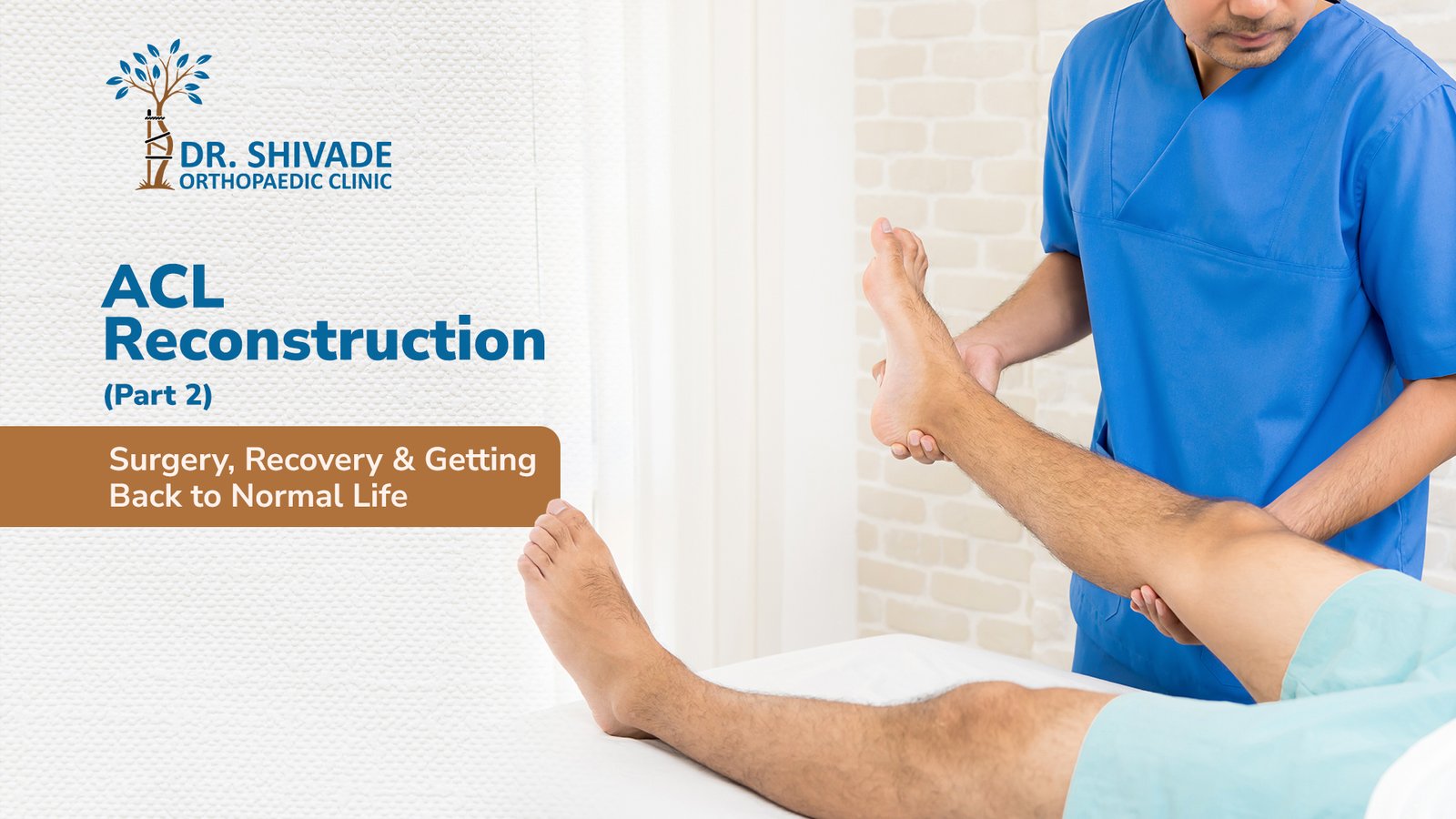
The Importance of Physiotherapy
Physiotherapy is a crucial part of ACL recovery. Surgery alone is not enough.
Physiotherapy helps to:
- Reduce swelling and stiffness
- Improve knee movement
- Strengthen muscles around the knee
- Restore balance and coordination
- Prevent future injuries
Skipping or delaying physiotherapy can slow recovery and affect long-term results.
ACL Recovery Timeline (Approximate)
Every patient heals differently, but a general timeline looks like this:
- First 2 weeks: Pain and swelling reduce, gentle movement begins
- 2–6 weeks: Improved walking, better knee control
- 3 months: Strength and flexibility increase
- 6 months: Advanced exercises and sports training
- 6–9 months: Return to sports or high-impact activities
Your doctor and physiotherapist will guide you at every stage.
👉Read more about treatments done at Dr. Shivade Clinic
Life After ACL Reconstruction
Most patients return to their normal daily routine after recovery. With proper rehabilitation:
- Walking becomes comfortable
- Knee stability improves
- Confidence in movement returns
- Sports and fitness activities can resume
Maintaining muscle strength and following exercise routines helps protect the knee in the long term.
Benefits of ACL Reconstruction Surgery
- Restores knee stability
- Reduces pain and swelling
- Improves mobility and strength
- Prevents further knee damage
- Helps patients return to an active lifestyle
Is ACL Reconstruction Safe?
ACL reconstruction is a commonly performed and safe procedure when done by an experienced orthopedic surgeon. Like any surgery, there are risks, but proper care, follow-ups, and rehabilitation minimize complications.
Final Thoughts
An ACL injury may feel life-changing, but it doesn’t have to be permanent. With timely surgery, structured physiotherapy, and commitment to recovery, patients can return stronger, more confident, and pain-free.
If knee instability or pain is affecting your life, consult an orthopedic specialist Dr. Shivade and take the next step toward recovery.