
Numb Hands at Night? It Could Be Carpal Tunnel Syndrome

Waking up to shake out a numb hand isn’t normal. Learn what causes carpal tunnel syndrome, how it differs from tennis elbow, and why early treatment matters.
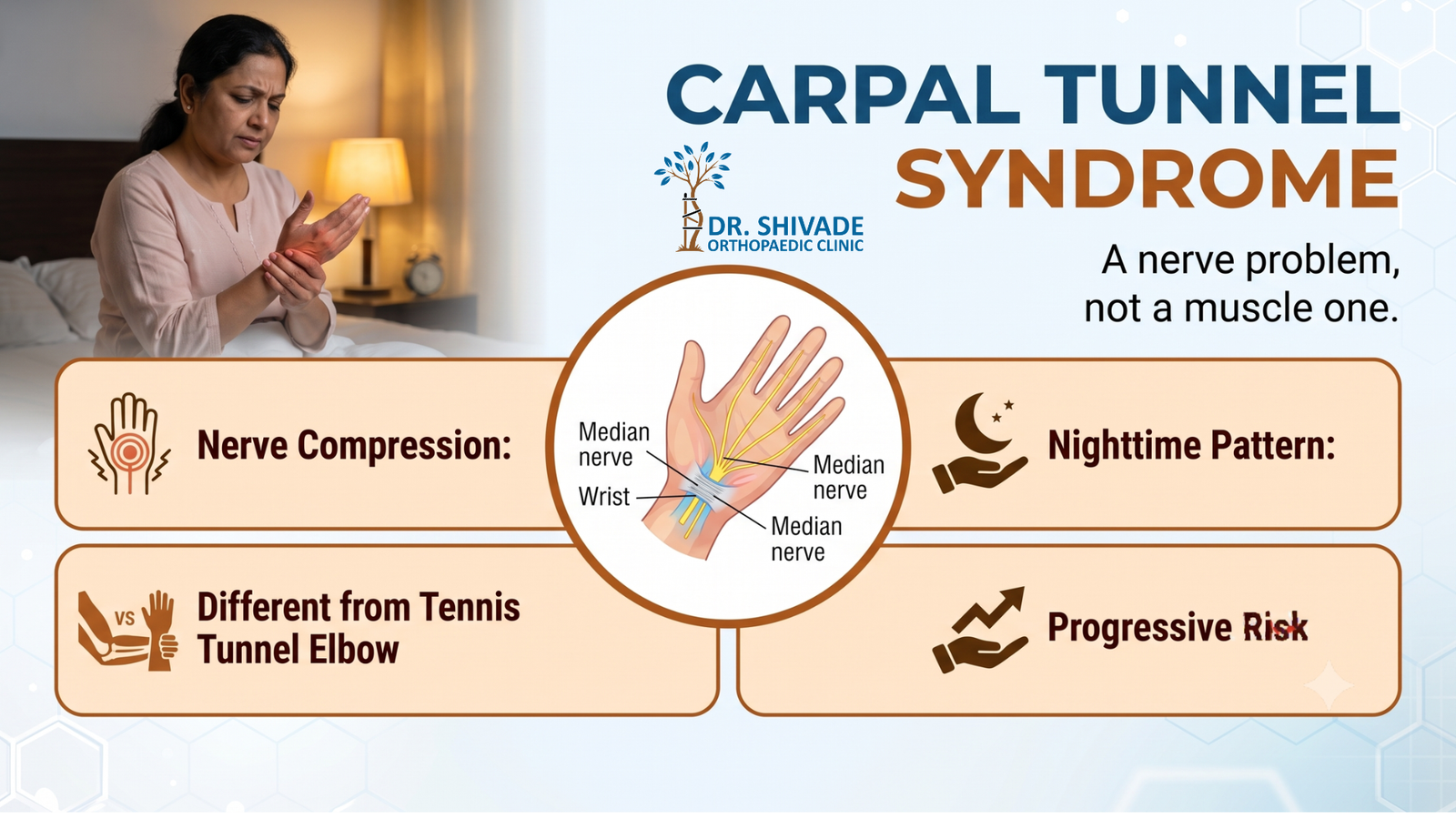
Waking up at 2 AM to shake out a numb hand isn’t normal, even if it happens often enough to feel routine. It’s one of the clearest early signs of carpal tunnel syndrome, a nerve, not a muscle, problem.
What’s actually happening in the wrist
A key nerve running through the wrist gets compressed inside a narrow tunnel of bone and ligament, causing numbness and tingling mainly in the thumb, index, and middle fingers. This compression is the root cause behind nearly all the symptoms patients describe.
Why symptoms are worse at night
Symptoms are often worse at night or first thing in the morning. Patients describe needing to “shake the hand awake,” long before any daytime pain shows up a pattern that’s a strong early indicator of the condition.
How it differs from tennis elbow
It’s different from tennis elbow: the pain there comes from tendon overuse, while carpal tunnel is nerve compression which is why the two conditions need entirely different treatment approaches, despite both affecting the arm.
What happens if it’s left untreated
Left untreated for too long, the numbness can progress to actual weakness and grip loss, which recovers far more slowly than the numbness itself once nerve damage sets in. This progression is exactly why early evaluation makes such a difference.
What early treatment looks like
If your hand has been going numb regularly, especially at night, it’s worth a proper nerve evaluation. Wrist splints and simple activity changes work best when started early, before symptoms progress to weakness or lasting nerve damage.
Frequently Asked Questions (FAQs)
The thumb, index, and middle fingers are most commonly affected, since these are the fingers served by the nerve that gets compressed within the wrist.
No, they're different conditions. Tennis elbow involves tendon overuse and pain in the elbow, while carpal tunnel syndrome is nerve compression in the wrist causing numbness and tingling.
Wrist positioning during sleep can increase pressure on the compressed nerve, which is why many patients experience worse numbness and tingling at night or upon waking.
Yes, especially when caught early. Wrist splints, activity modification, and sometimes physiotherapy can effectively manage symptoms before they progress to the point of needing surgery.
Prolonged nerve compression can lead to permanent weakness and grip loss in the affected hand, which is significantly harder to reverse compared to early-stage numbness and tingling.