
“It’s just old age” is the most common thing patients tell themselves before they finally come in for knee pain and it’s also the most common myth in orthopaedics. Knee osteoarthritis is one of the most frequently misunderstood conditions we treat, largely because people assume it’s something you simply have to live with as you get older.
What actually causes knee osteoarthritis
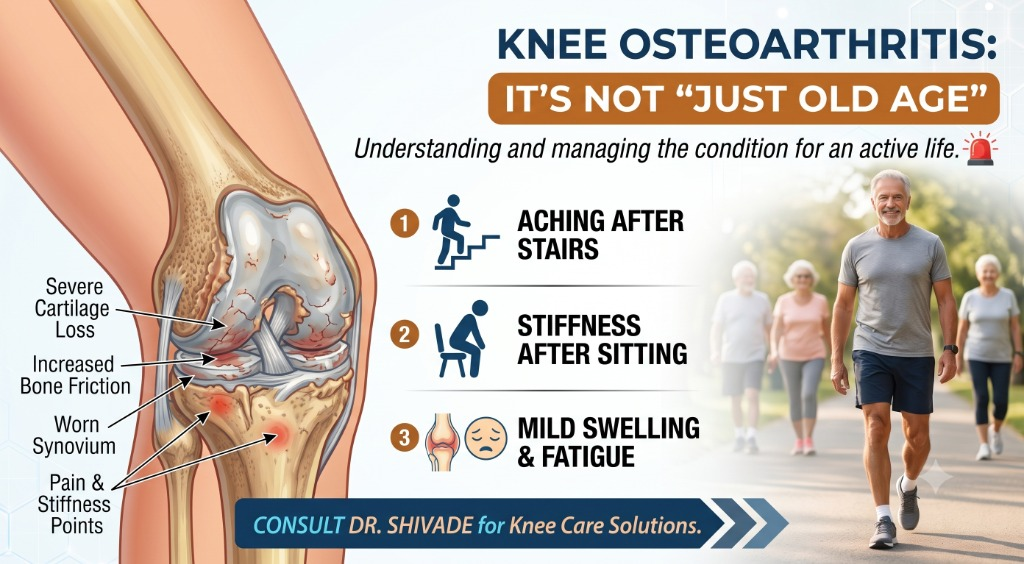
Osteoarthritis develops when the cartilage cushioning the knee joint gradually wears down. This cartilage acts as a shock absorber between the thigh bone and shin bone, and as it thins, bone-on-bone friction increases, leading to stiffness, swelling, and pain. While age is a factor, how much the condition affects your daily life depends far more on how early it’s addressed and how consistently treatment is followed.
Early signs people usually dismiss
Patients often describe their knees as “aching a bit more lately” — pain that’s worse going up or down stairs, or after sitting for long periods, is one of the earliest and most reliable warning signs. Because this stiffness is mild at first, it’s frequently written off as general fatigue rather than a specific joint issue. This early stage, however, is exactly when treatment has the most impact.
Non-surgical treatment options
Not every case of knee osteoarthritis needs surgery. In fact, early-stage arthritis often responds very well to a combination of physiotherapy, weight management, and activity modification, sometimes with nothing more than occasional pain relief medication. Strengthening the muscles around the knee — particularly the quadriceps — reduces the load carried by the joint itself and can meaningfully slow how quickly the condition progresses.
When surgery becomes necessary
Ignoring early symptoms for years is the most common reason surgery eventually becomes the only option. Once cartilage damage has progressed too far, conservative treatments can no longer offer meaningful relief, and joint replacement becomes the most reliable way to restore mobility and reduce pain.
The bottom line
If your knees have been “just aching a bit more lately,” that’s precisely the window where treatment works best. Waiting until the pain becomes unbearable only narrows your options later.