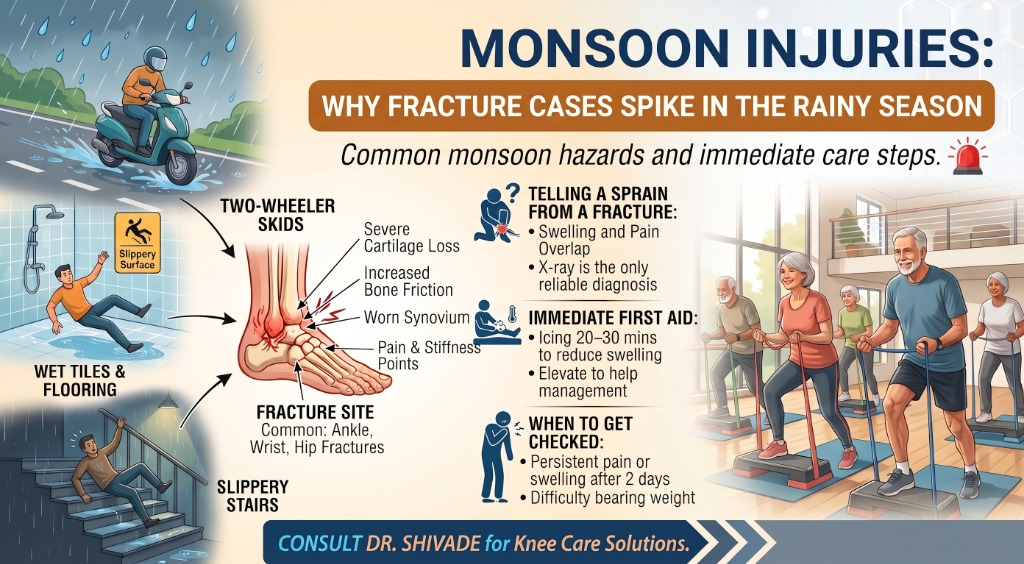

Every monsoon, fracture cases rise not from anything dramatic, but from wet tiles, slippery stairs, and two-wheeler skids on rainy roads. These are the everyday accidents that rarely make headlines but keep trauma units busy through the season.
Why monsoon injuries are so common
Rain doesn’t just make roads slippery — it makes bathroom floors, staircases, and even office lobbies more hazardous than usual. Because these falls often happen during routine daily activities, people tend to underestimate them, assuming a fall at home or a minor skid on a two-wheeler couldn’t possibly cause a fracture.
Why you can’t tell a sprain from a fracture on your own
In the first hour after a fall, a sprain and a fracture can feel nearly identical — both cause swelling and pain that make it hard to judge severity. An X-ray is the only reliable way to know for certain. A common misconception is that being able to move the injured limb rules out a fracture, but hairline fractures are often still mobile, especially before swelling fully sets in.
First aid that genuinely helps
While waiting to reach a clinic, icing and elevating the injured area helps reduce swelling meaningfully. This not only makes the person more comfortable, but also makes the eventual diagnosis and casting process smoother once you arrive for treatment.
Which injuries spike during monsoon
Ankle injuries from slippery surfaces are the most talked-about, but wet stairs and bathroom floors are just as often the cause of wrist and hip fractures, particularly among older adults whose balance and bone density make falls riskier.
When to get checked
If you’ve had a fall this season and something still feels “off” after a couple of days of persistent swelling, pain that doesn’t ease, or difficulty bearing weight — it’s time for an evaluation. Small fractures left untreated tend to heal incorrectly, turning a simple fix into a much longer recovery process later.