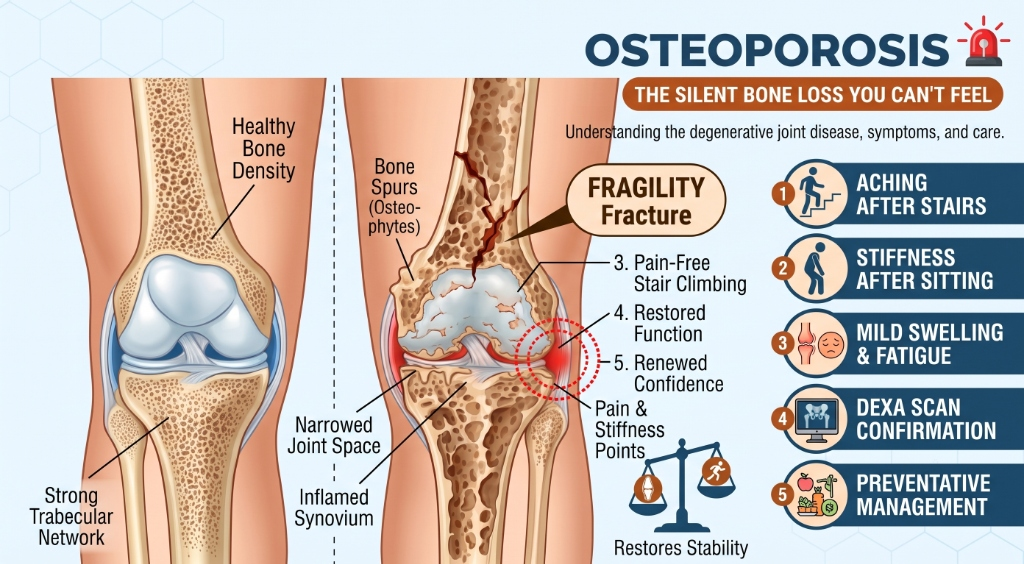

Bone loss doesn’t announce itself with pain. It’s often silent until a fracture happens from something as small as a minor fall or a light bump. Osteoporosis is far more common than most people realize, especially in women after menopause, and it quietly weakens bones over years without any obvious symptoms.
Why the fracture is often the first sign
Many patients only discover they have osteoporosis after an unexpected fracture; a fall that shouldn’t have caused serious injury ends up revealing significant bone density loss on imaging. In these cases, the injury itself effectively becomes the diagnosis, which is exactly what makes osteoporosis so dangerous: by the time it’s noticed, meaningful bone loss has often already occurred.
How bone density changes with age
Bone density naturally declines as we age, but the rate of that decline can be managed with the right screening, nutrition, and medical care. This is an important distinction: osteoporosis isn’t simply an unavoidable consequence of getting older, but a condition that can be actively slowed and managed when caught early.
The role of a DEXA scan
A bone density scan, known as a DEXA scan, can catch osteoporosis long before a fracture forces the issue. The test itself takes only a few minutes and provides a clear picture of bone strength, allowing treatment to begin proactively rather than reactively.
What actually helps slow bone loss
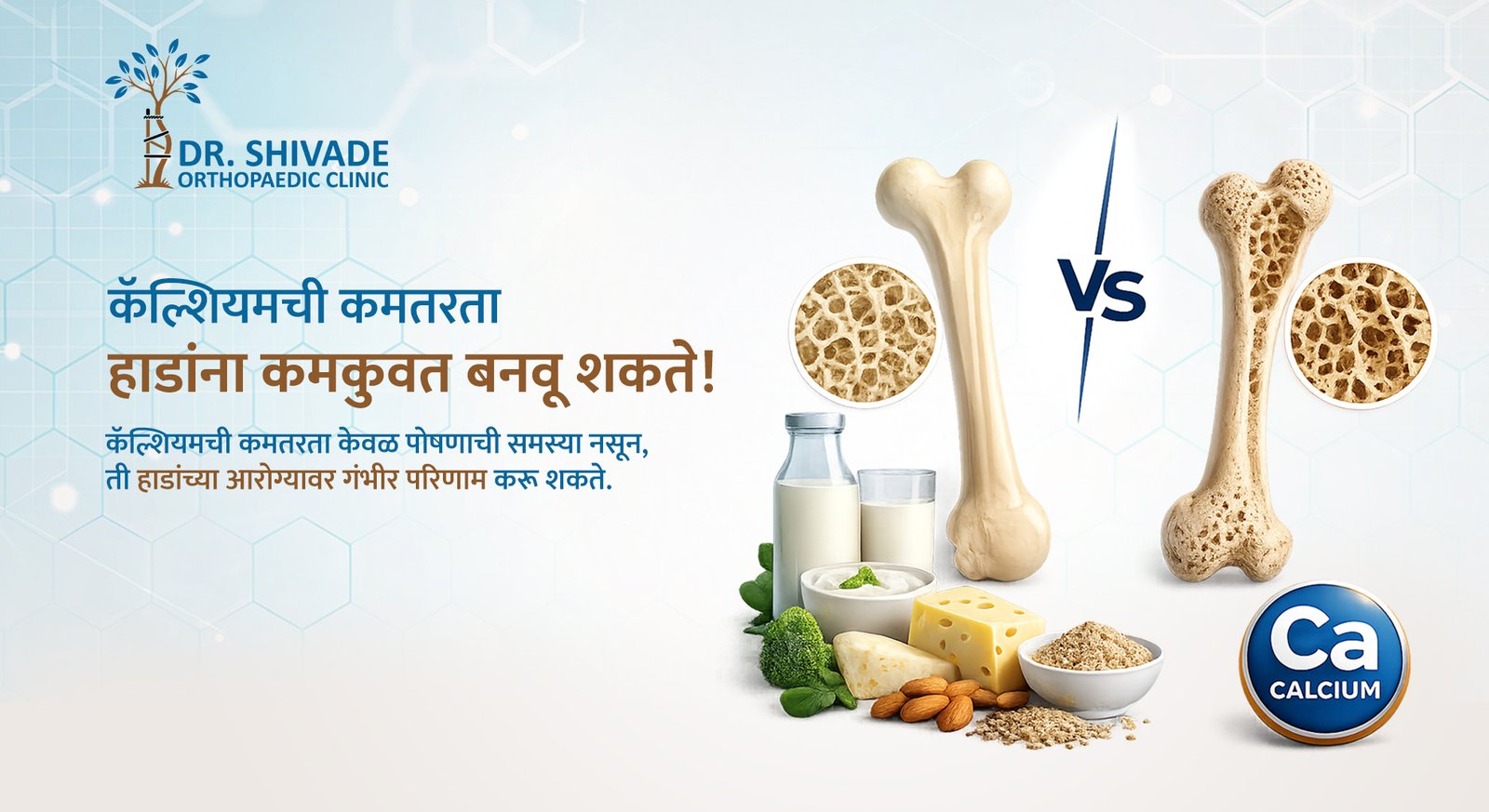
Weight-bearing exercise, along with adequate calcium and vitamin D intake, plays a genuine role in slowing bone density decline. These lifestyle factors work alongside any medical treatment prescribed, rather than replacing it.
Who should get screened
If you’re over 45, or have a family history of osteoporosis, a bone health check is worth having on your radar, not just your knees or joints. Early screening is a simple, low-effort step that can prevent a life-altering fracture later.