Desk Job, Spine Damage: Why Pune’s IT Professionals Are at Risk

Long hours, poor posture, and back-to-back calls are straining the spines of Pune’s IT workforce earlier than expected. Learn the warning signs and simple fixes.
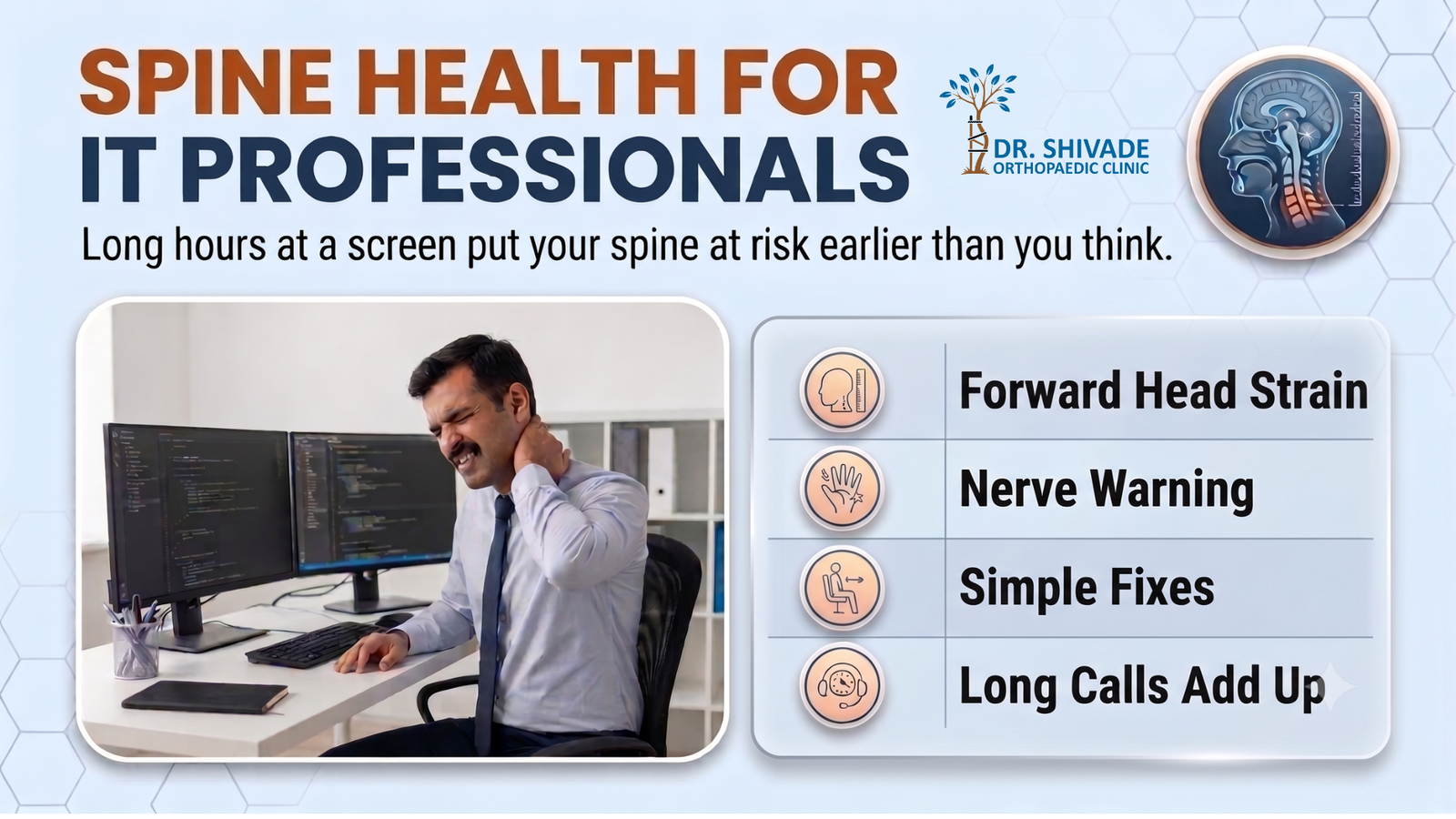
Pune’s IT crowd knows this feeling well: the neck stiffness after back-to-back calls, the dull ache between the shoulder blades by 6 PM. Long hours in front of screens, poor posture, and minimal movement are putting cervical and lumbar spine health at risk for a huge number of working professionals, often starting far earlier than expected, sometimes in the mid-20s rather than middle age.
Why posture matters more than people think
A forward head posture, common during laptop use, puts significantly more strain on the neck than most people realize. For every inch the head moves forward from a neutral position, the effective load carried by the neck muscles multiplies substantially.
Numbness and tingling are red flags
Numbness or tingling in the arms or fingers is a sign that needs attention, not just a stretch break. This can indicate nerve involvement that goes beyond simple muscular tightness and shouldn’t be brushed off as ordinary fatigue.
Simple fixes that prevent bigger problems
Simple ergonomic changes screen height, chair support, and regular movement breaks prevent most of these problems before they become chronic. These changes cost far less, both in effort and money, than treating a chronic spine issue later on.
The hidden culprit: long, uninterrupted calls
Long video calls without a single posture change are one of the most common culprits seen in younger professionals with early spine complaints. Even short, deliberate movement breaks during long calls can make a meaningful difference over time.
When it’s time to get checked
If your neck or lower back has been “just a bit stiff” for months, that’s your spine asking for a break and possibly a proper evaluation, rather than continued self-management.
Frequently Asked Questions (FAQs)
The "Golden Hour" refers to the critical first 60 minutes immediately following a traumatic road accident. Prompt medical attention and emergency trauma intervention within this window significantly increase survival rates and minimize long-term limb disability.
Ensure your safety first, immediately call emergency medical assistance, keep the victim still to prevent neck/spinal cord damage, apply clean pressure to control severe bleeding, and avoid giving the victim food or liquids until medically cleared.
High-impact traffic accidents often cause hidden compound fractures, joint dislocations, or severe ligament damage obscured by shock. Early orthopedic X-rays and CT scans ensure prompt surgical alignment and prevent joint deformity.
Trauma surgeons perform emergency stabilization, debridement, and rigid internal fixation using specialized titanium plates, screws, or intramedullary rods to accurately realign broken bones and restore vascular function.
Supervised gentle rehabilitation begins within 24 to 48 hours after surgical stabilization once the patient is stable, preserving joint range of motion, muscle strength, and preventing stiffness.