Wrist Fractures From Falls: Why They’re So Common

Putting your hand out to break a fall is instinctive and it’s the most common cause of wrist fractures. Learn the warning signs and why early imaging matters.
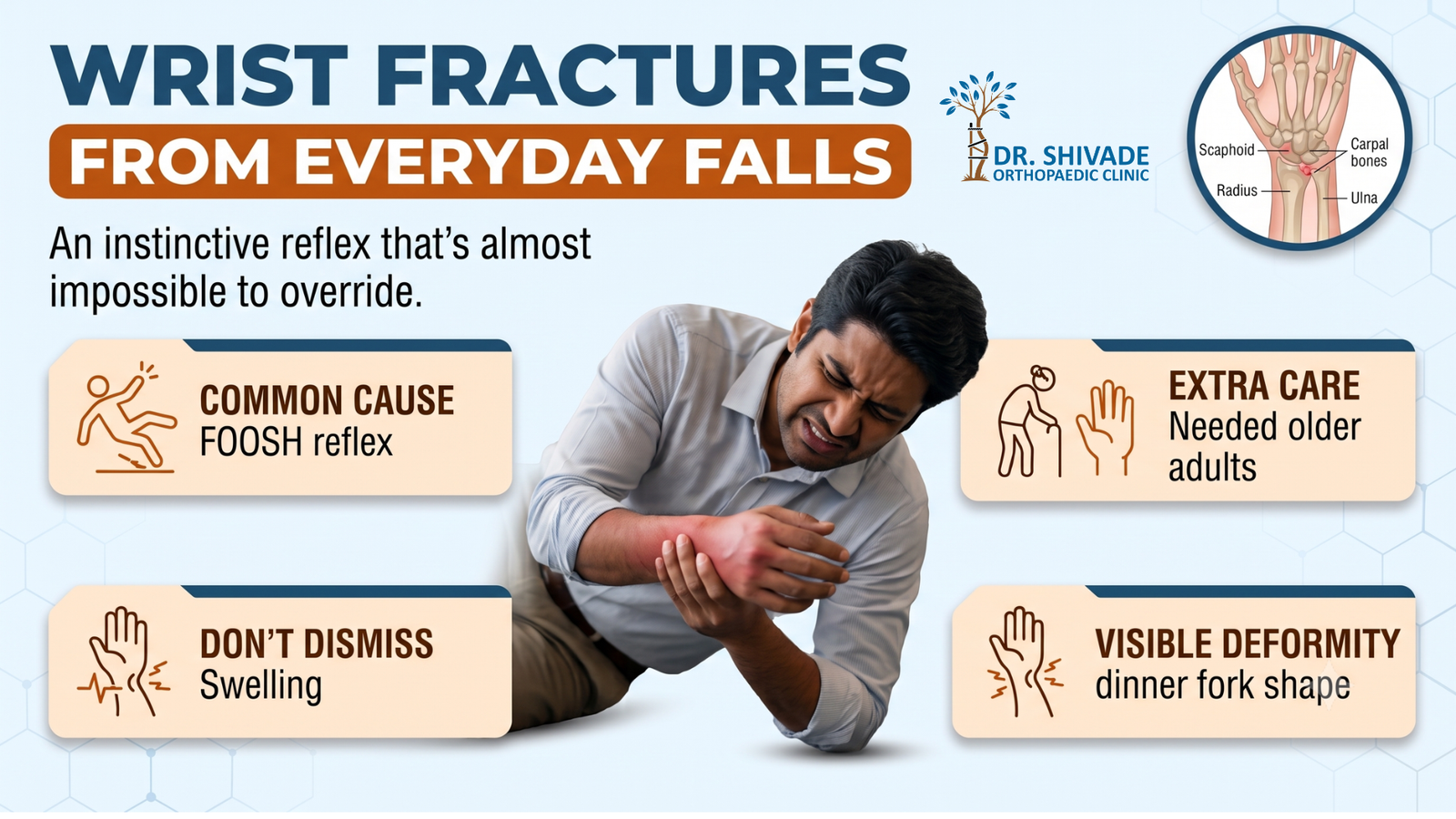
The instinctive reaction to a fall putting your hand out to break it is exactly how most wrist fractures happen. It’s a reflex almost impossible to override, which is part of why this injury is so common across every age group.
Why this is the most common cause of wrist fractures
A “fall on an outstretched hand” is the single most common cause of wrist fractures across all age groups from children falling off a bicycle to adults slipping on a wet floor. The mechanism is nearly universal, which is why wrist fractures show up so consistently across different age groups and activities.
Symptoms that go beyond a simple sprain
Swelling and pain that make it hard to grip or rotate the wrist should never be dismissed as a sprain, especially if there’s tenderness directly over the bone rather than around the joint. This distinction is often the clearest early clue that something more serious than a sprain has occurred.
Why children and older adults need extra attention
In children and older adults especially, wrist fractures are common and often need prompt, careful treatment to avoid long-term stiffness. Children’s growing bones and older adults’ more brittle bones both require particular attention to ensure proper healing.
When deformity means immediate imaging
A visible bend or deformity at the wrist, even a subtle one, almost always means imaging is needed immediately, rather than waiting to see if the swelling goes down first. This kind of visible change is rarely something that resolves on its own.
Why early treatment matters
If a fall has left your wrist swollen, painful, or difficult to move, get it imaged early. Treating it late almost always means a longer, more complicated recovery than addressing it promptly would have required.
Frequently Asked Questions (FAQs)
Some hairline fractures allow limited walking, especially before swelling sets in fully, which is why walking ability alone isn't a reliable way to rule out a fracture.
If pain and swelling haven't clearly improved within about a week of rest, ice, and elevation, it's time to get an X-ray rather than continuing to wait.
Generally, yes — rapid, significant swelling and early bruising often indicate a more serious injury than a mild sprain, though imaging is still needed to confirm.
It can heal improperly, leading to long-term instability, chronic pain, or the eventual need for corrective surgery that could have been avoided with early treatment.
RICE helps manage symptoms for both sprains and fractures in the short term, but it doesn't replace proper diagnosis; a fracture still needs to be identified and treated appropriately.