
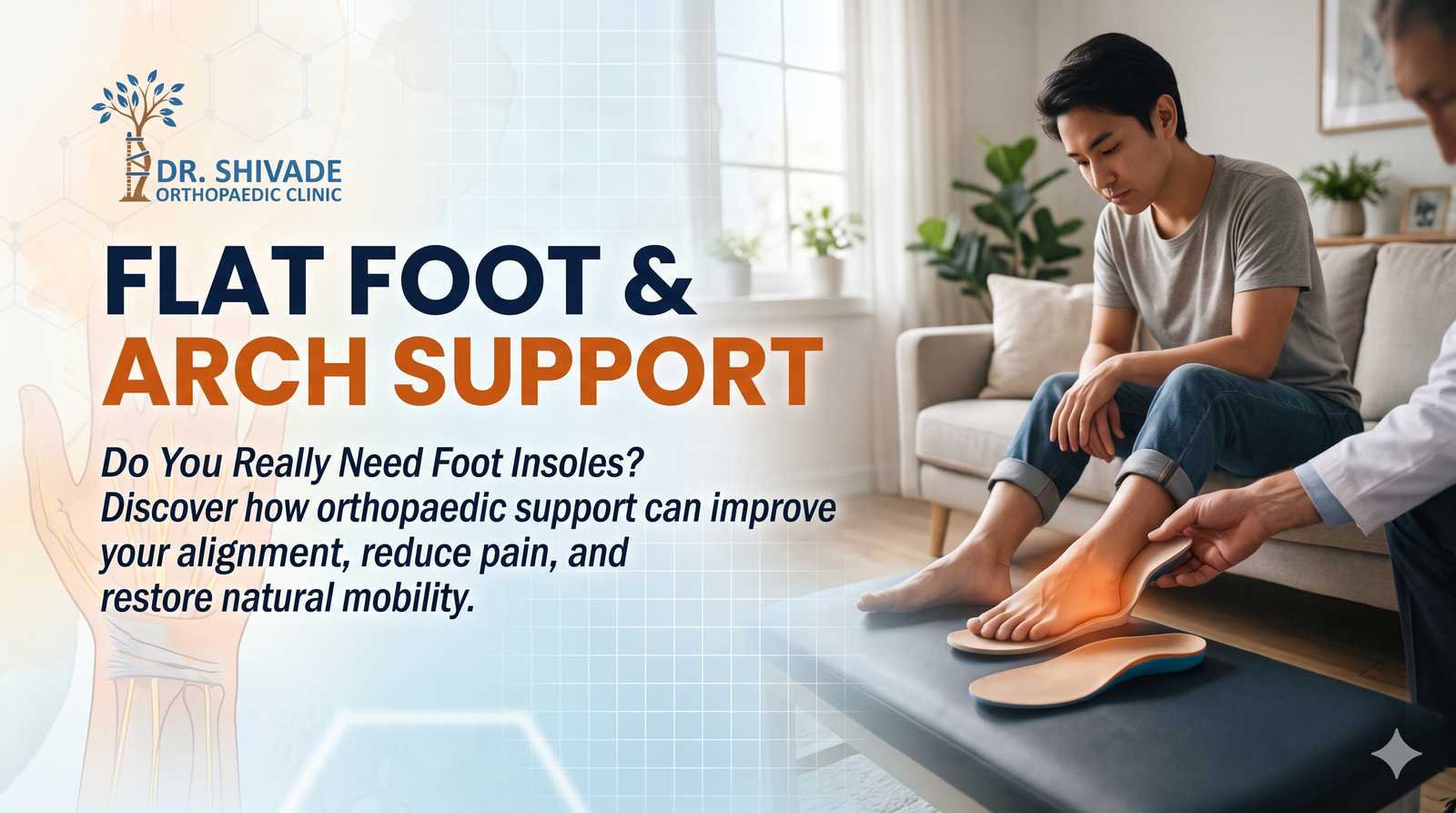
Flat Foot and Arch Support: Do You Really Need Foot Insoles?

Flat Foot and Arch Support: Understanding Your Foot Health
Have you noticed that the inner curve of your foot looks flatter than usual? Do you experience foot pain, ankle discomfort, tired feet, or difficulty standing for long hours? These could be signs of flat foot (pes planus).
A normal foot has a natural arch that helps absorb shock, maintain balance, and distribute body weight while walking or running. In flat feet, this arch becomes reduced or collapses, causing changes in foot alignment and mechanics.
While some people with flat feet may not experience any symptoms, others may develop pain and functional problems that require medical evaluation.
What Is Flat Foot?
Flat foot is a condition where the medial longitudinal arch of the foot becomes lower or flattened, causing more of the sole to touch the ground.
Flat feet can be:
1. Flexible Flat Foot
- The arch appears when the foot is lifted or when standing on toes.
- It may not cause any symptoms.
- Treatment is usually not required unless pain or functional problems develop.
2. Rigid Flat Foot
- The arch remains flattened even when the foot is not bearing weight.
- It may be associated with stiffness, pain, or underlying structural problems.
- Orthopaedic assessment is important.
What Causes Flat Feet?
Flat feet can occur due to several reasons, including:
✔ Genetic Factors
Some people naturally have lower arches from childhood.
✔ Weakness or Injury of Foot Tendons
The posterior tibial tendon, which helps support the foot arch, can become weak or damaged, especially in adults.
✔ Foot Injuries
Previous fractures, ligament injuries, or trauma can affect foot alignment.
✔ Age-Related Changes
With time, tendons and ligaments may lose strength, affecting arch support.
✔ Increased Stress on Feet
Factors such as prolonged standing, obesity, or high-impact activities may increase symptoms. PMC
Common Symptoms of Flat Foot
Many people with flat feet have no complaints. However, symptoms may include:
- Pain in the inner side of the foot or ankle
- Foot fatigue after walking or standing
- Swelling around the ankle
- Difficulty wearing certain footwear
- Changes in walking pattern
- Pain during physical activities
If flat foot is associated with progressive deformity, increasing pain, or difficulty performing daily activities, an orthopaedic evaluation is recommended. PubMed
How Does Arch Support Help in Flat Feet?
Arch supports (orthotic devices) are specially designed inserts placed inside footwear to provide additional support to the foot.
They may help by:
✔ Improving foot comfort
✔ Reducing pressure on painful areas
✔ Supporting foot alignment
✔ Improving walking mechanics in selected cases
However, arch supports do not permanently create a new arch or “cure” flat feet. They are mainly used to reduce symptoms and improve function when recommended after evaluation. Mayo Clinic
Do All Flat Feet Need Arch Support?
No.
The requirement for arch support depends on:
- Presence of pain or discomfort
- Foot flexibility
- Age and activity level
- Foot alignment
- Underlying tendon or ligament problems
Using the wrong type of support without proper assessment may not address the actual cause of symptoms.
An orthopaedic consultation helps determine whether you need:
- Footwear modification
- Stretching and strengthening exercises
- Physiotherapy
- Custom orthotics
- Further treatment options
Exercises That May Support Foot Health
Depending on individual condition, exercises may include:
Foot Strengthening Exercises
Helps improve the muscles supporting the arch.
Calf Stretching
May reduce tightness affecting foot mechanics.
Balance and Stability Exercises
Can improve foot and ankle control.
Exercises should be performed based on professional guidance, especially when pain is present.
When Should You Consult an Orthopaedic Surgeon?
Seek medical advice if you experience:
- Persistent foot or ankle pain
- Sudden development of flat foot in adulthood
- Increasing deformity of the foot
- Difficulty walking or standing
- Swelling or weakness around the ankle
- Symptoms affecting daily activities
Early evaluation can help identify the cause and prevent worsening problems.
Conclusion
Flat feet are common and do not always require treatment. However, when flat feet cause pain, discomfort, or difficulty with movement, proper assessment becomes important.
Arch support can provide relief and improve comfort in selected cases, but the right treatment depends on the underlying cause and severity of the condition.
Consult an experienced orthopaedic specialist for a proper diagnosis and personalised treatment plan.
Frequently Asked Questions (FAQs)
Flat feet may not always require correction. Treatment focuses on reducing symptoms and improving foot function.
Arch supports can help reduce discomfort and improve support in symptomatic flat feet, but they do not permanently restore the arch.
Most cases are managed without surgery. Surgery may be considered only in selected patients with persistent pain or structural problems despite conservative treatment.
No. The need for insoles depends on symptoms, foot structure, and clinical evaluation.