Your Parent Fell at Home and Said “I’m Fine” Here’s Why You Shouldn’t Believe It Right Away

It happens in seconds. A missed step near the bathroom, a slip on a wet kitchen floor, a trip over a rug that has been in the same spot for twenty years. Your father goes down. Before you can even reach him, he’s already saying it: “Arre, I’m fine. Just help me up.”
It’s instinct for him to reassure you, and for you to believe him because you want to. But this is exactly the moment when families make a decision without realizing it’s a decision at all: they help him up, dust him off, and move on with the day.
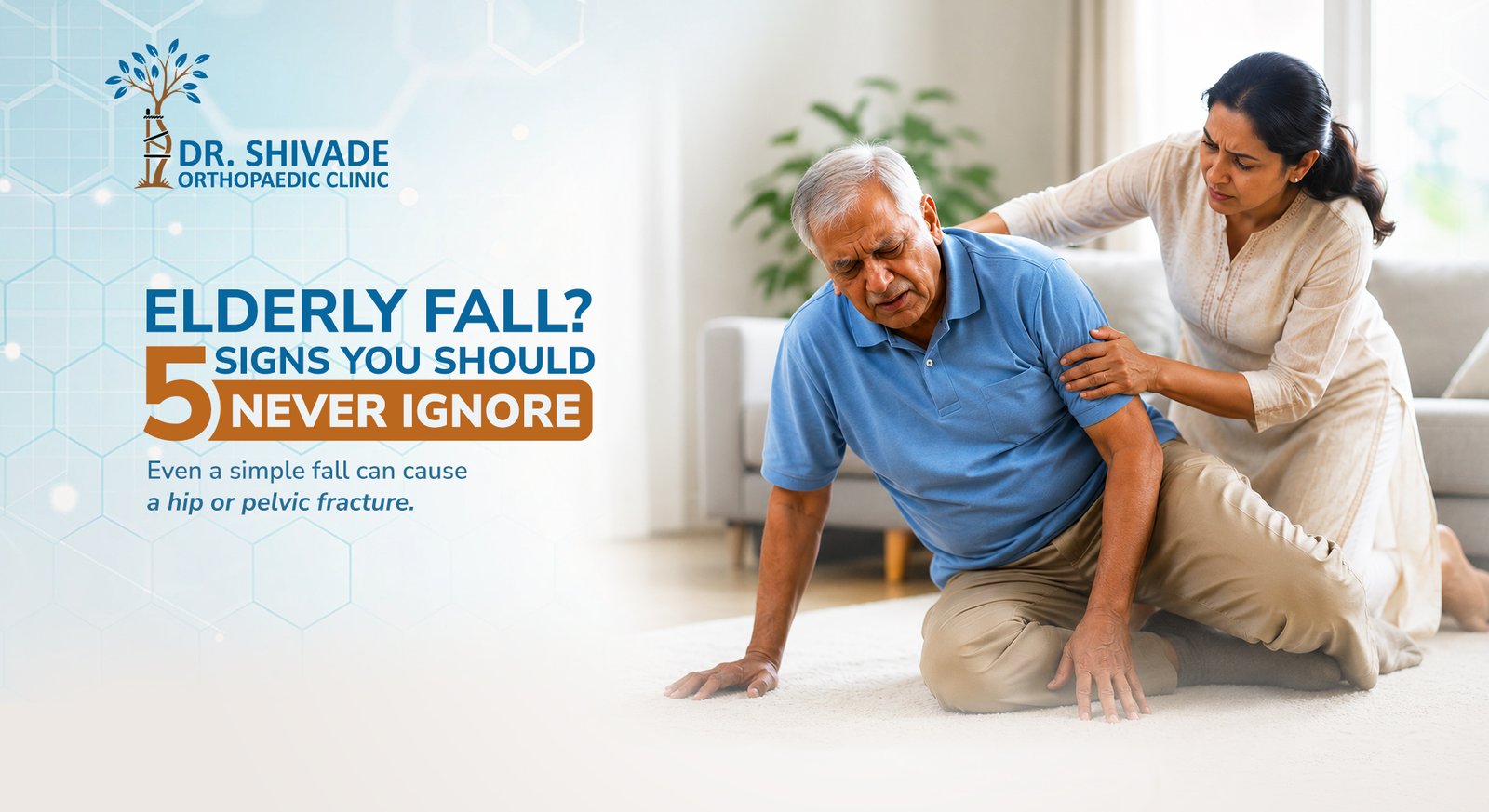
Here’s what most people don’t know: a fall doesn’t need to look dramatic to cause serious damage. In elderly patients, even a simple, low-impact fall, such as stumbling on the way to the washroom or losing balance while getting up from a chair, can be enough to fracture the hip or pelvis. There’s no dramatic crash, no obvious wound, just a small stumble that quietly turns into a hospital admission.
Why Elderly Bones Break So Easily
As we age, bone density decreases, a condition known as osteoporosis. Many people are never diagnosed with it, since it shows no symptoms until something breaks. Bones that were once strong enough to absorb a fall become brittle enough to fracture under body weight alone. This is why a fall that would leave a 30-year-old with a bruise can leave a 70-year-old with a hip fracture.
Hip fractures in the elderly are not “just an injury” they’re a turning point. Research consistently shows that seniors who suffer a hip fracture face a significantly higher risk of long-term mobility loss, and in some cases more serious health decline, if the fracture isn’t treated promptly. Time matters enormously here.
5 Warning Signs You Should Never Ignore After a Fall
If an elderly family member falls, don’t just check if they’re conscious and talking. Look for these specific signs before deciding it’s “nothing”:
- They can’t stand or bear weight on one leg, even briefly.
- They complain of hip or groin pain, even if it seems mild at first.
- One leg looks shorter, or the foot is turned outward, compared to the other.
- Any movement causes severe pain, such as when trying to shift position, sit up, or adjust their leg.
- They suddenly struggle to walk normally, even a few steps, when they were walking fine minutes earlier.
If even one of these signs appears, it’s not a “let’s wait and see” situation, it’s a “get to an orthopedic clinic now” situation.
“Walk It Off” Is the Worst Thing You Can Say
This is the mistake that costs families the most time. Out of concern for not “overreacting,” or because the elder insists they’re okay, families often encourage them to try walking to check if it’s serious. But if there’s a fracture, every attempt to stand or walk on it can worsen the injury, turning a clean, treatable fracture into a more complicated one.
The instinct to downplay pain is especially common among elderly patients. Many don’t want to be seen as “a burden” or as “making a fuss,” which means the responsibility often falls on family members to look past the reassurance and check the actual signs.
What To Do Instead
If a fall happens:
- Don’t force them to stand or walk, even if they insist they can.
- Keep the leg as still and supported as possible.
- Check for the 5 warning signs above.
- If any are present, get them evaluated by an orthopedic specialist without delay. Don’t wait through a day of “let’s see if it gets better.”
A hip or pelvic fracture, when caught and treated early, has a far better recovery outlook than one left unaddressed for days. The difference between a full, independent recovery and a long, difficult one often comes down to how quickly it’s acted on, not how bad the fall looked.
The next time someone at home falls and says “I’m fine,” take a moment to actually check. It could make all the difference.
Frequently Asked Questions (FAQs)
Not every fall causes a fracture, and walking normally afterward is a good sign. However, keep an eye out over the next day or two for delayed pain, swelling, or stiffness, since some fractures don't show symptoms immediately.
A bruise usually causes localized soreness that improves within a day or two, and the person can still bear weight. A fracture typically causes sharp, persistent pain, an inability to stand or bear weight, and sometimes a visible deformity like a shortened or outward-turned leg.
In most cases, yes. Surgery is generally recommended for hip fractures in older adults because it allows faster mobilization, which reduces complications linked to prolonged bed rest. The exact approach depends on the fracture type and the patient's overall health.
Simple changes make a real difference: removing loose rugs, adding grab bars in the bathroom, improving lighting in hallways, and using non-slip mats. Regular bone density checks and addressing vision or balance issues also help lower fall risk.
Keep them still and avoid moving the affected leg or hip unnecessarily. Don't attempt to make them stand or walk. Support the area gently, keep them comfortable, and get them to an orthopedic specialist as soon as possible.