Ligament vs Tendon A Complete Guide to Structure, Function, Injuries & Recovery

Our body’s ability to move, stay balanced, and perform daily activities depends heavily on connective tissues. Among these, ligaments and tendons play a crucial role. Although they are often confused, they differ significantly in structure, function, and healing.
This detailed guide will help you clearly understand ligament vs tendon, along with their importance in maintaining a healthy musculoskeletal system.
Understanding Connective Tissues
Before diving into the differences, it’s important to know that both ligaments and tendons are part of the body’s connective tissue system, primarily made of a protein called collagen.
Collagen provides:
- Strength
- Flexibility
- Structural support
However, the arrangement of collagen fibers is what makes ligaments and tendons function differently.
What is a Ligament? (In Detail)
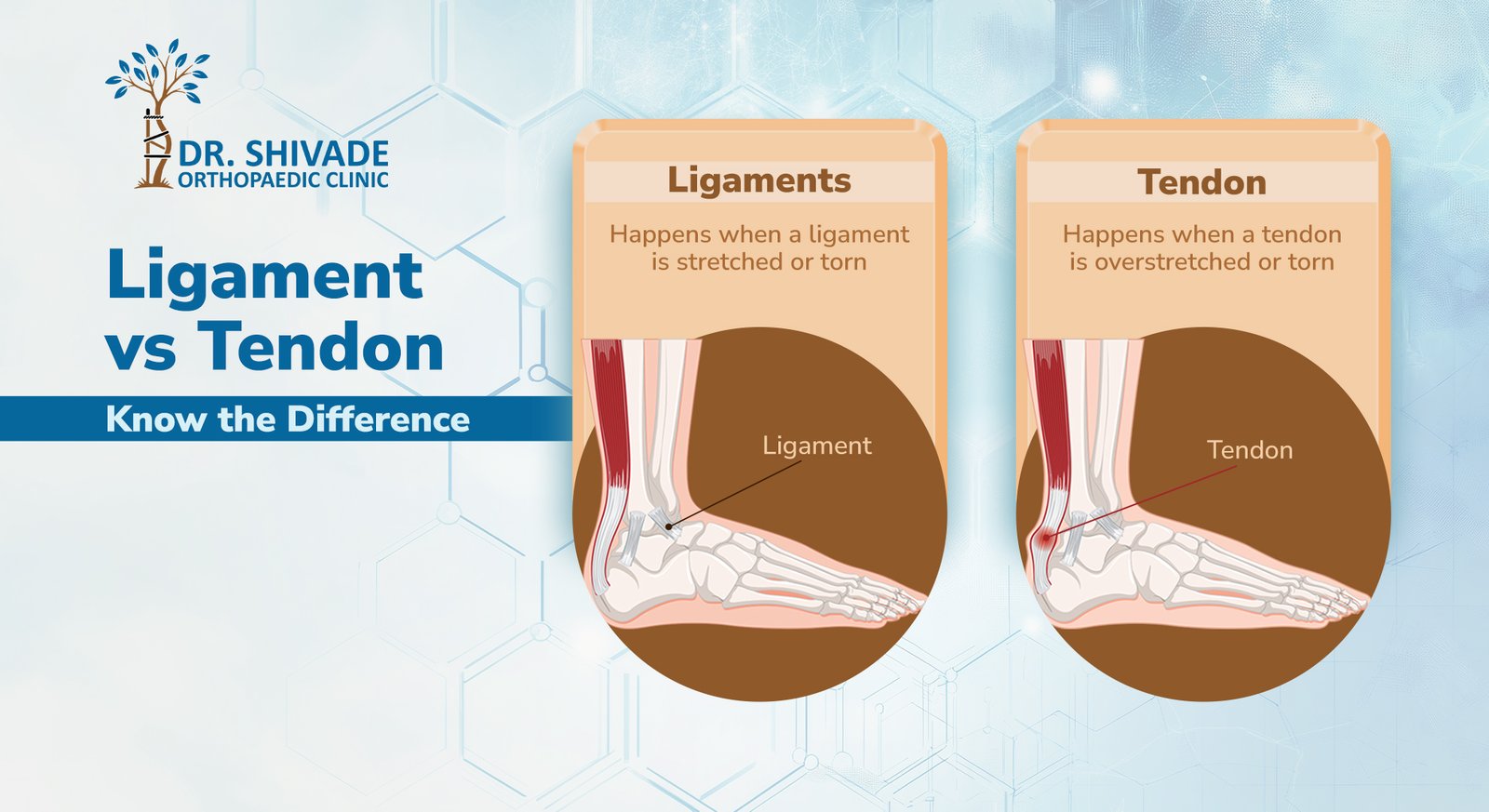
A ligament is a dense, slightly elastic connective tissue that connects bone to bone, forming an essential part of joints.
Key Functions of Ligaments:
- Stabilize joints during movement
- Prevent excessive or abnormal motion
- Guide joint movement in a controlled way
Structural Characteristics:
- Composed of loosely arranged collagen fibers
- Contains elastin (which gives flexibility)
- Less rigid compared to tendons
Types of Ligaments:
- Capsular ligaments – surround joints
- Extra-capsular ligaments – located outside joints
- Intra-capsular ligaments – found inside joints (like ACL)
Example:
The Anterior Cruciate Ligament (ACL) in the knee prevents the shin bone from sliding too far forward.
What is a Tendon? (In Detail)
A tendon is a tough, fibrous connective tissue that connects muscle to bone, allowing movement.
Key Functions of Tendons:
- Transfer force generated by muscles to bones
- Enable movement such as lifting, walking, and running
- Store and release energy during motion
Structural Characteristics:
- Highly organized, parallel collagen fibers
- Very strong and resistant to tension
- Minimal elasticity (compared to ligaments)
Types of Tendons:
- Flexor tendons – help bend joints
- Extensor tendons – help straighten joints
Example:
The Achilles tendon helps you push off the ground while walking or running.
Ligament vs Tendon: Deep Comparison
Feature | Ligament | Tendon |
Connection | Bone to bone | Muscle to bone |
Primary Role | Joint stability | Movement |
Fiber Arrangement | Less organized | Highly parallel and organized |
Elasticity | Moderate (more flexible) | Low (more rigid) |
Strength Type | Resists joint stress | تحمل high pulling forces |
Blood Supply | Poor | Slightly better than ligaments |
Healing Time | Slow | Moderate |
Injury Type | Sprain | Strain / Tendinitis |
Biomechanics: How They Work Together
Ligaments and tendons don’t work in isolation—they function together to ensure smooth movement.
- Tendons initiate movement by pulling bones when muscles contract
- Ligaments control that movement by preventing excessive motion
👉 Example:
When you bend your knee:
- Tendons pull the bones
- Ligaments stabilize the joint
This coordination ensures controlled, safe, and efficient movement.
Common Injuries Explained
1. Ligament Injuries (Sprains)
These occur when ligaments are stretched beyond their limit or torn.
Grades of Sprain:
- Grade 1: Mild stretching
- Grade 2: Partial tear
- Grade 3: Complete rupture
Common Causes:
- Sudden twisting movements
- Sports injuries
- Falls or accidents
2. Tendon Injuries
a) Tendinitis (Inflammation):
- Caused by repetitive stress
- Common in shoulders, elbows, knees
b) Tendon Tear:
- Occurs due to sudden force or long-term degeneration
c) Tendinosis:
- Chronic degeneration without inflammation
Healing Process: Why It Takes Time
Ligaments:
- Poor blood supply
- Slower cell regeneration
- Healing may take weeks to months
Tendons:
- Better blood supply than ligaments
- Still slow due to dense structure
Modern Treatment Approaches
Depending on severity, treatment may include:
Non-Surgical:
- RICE method (Rest, Ice, Compression, Elevation)
- Physiotherapy
- Anti-inflammatory medications
Advanced Treatments:
- PRP (Platelet-Rich Plasma) therapy
- Shockwave therapy
Surgical Treatment:
- Required in complete tears (e.g., ACL reconstruction)
Prevention: Protect Your Ligaments and Tendons
Best Practices:
- Proper warm-up and cool-down
- Strength training for muscles
- Flexibility exercises (stretching, yoga)
- Gradual increase in activity intensity
- Wearing proper footwear
Why This Topic Matters
Understanding the difference between ligaments and tendons helps:
- Prevent injuries
- Improve athletic performance
- Ensure correct diagnosis and treatment
- Support long-term joint health
Conclusion
Both ligaments and tendons are essential for movement and stability, but they serve distinct purposes. Ligaments protect and stabilize joints, while tendons make movement possible by connecting muscles to bones.
Taking care of these connective tissues is key to maintaining an active and pain-free life.